
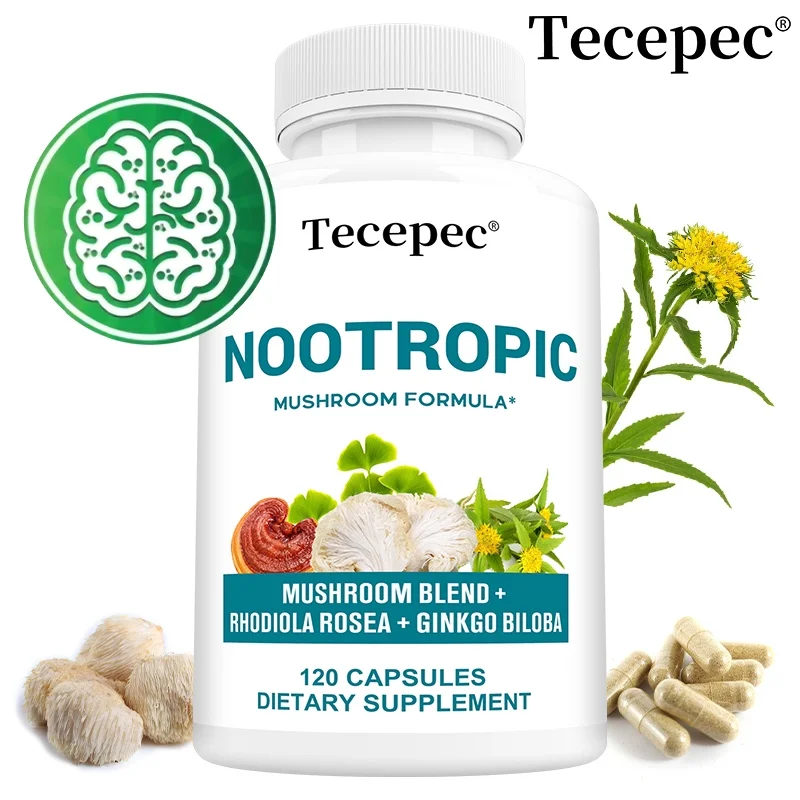
In an age of endless distractions and mental overload, many people are searching for ways to stay sharp, clear, and focused—without burning out. This has sparked a surge of interest in two categories of cognitive enhancers: adaptogens and nootropics.
While both aim to boost mental performance, they work in very different ways. And interestingly, functional mushrooms—like Lion’s Mane, Cordyceps, and Reishi—are being explored for their unique ability to bridge the gap between these two worlds.
So what’s the difference between adaptogenic mushrooms and traditional nootropics? And which one is better for focus, energy, and cognitive clarity?
Let’s break it down.
💡 First, What Are Nootropics?
Nootropics (sometimes called “smart drugs” or cognitive enhancers) are substances that improve mental functions, such as:
Focus
Memory
Creativity
Motivation
Processing speed
These can be natural (like caffeine, L-theanine, or ginkgo biloba) or synthetic (like modafinil or racetams). Their main goal is to directly stimulate the brain for short-term performance gains.
Pros:
Quick effects
Useful for high-pressure tasks or mental fatigue
Popular among students, gamers, and professionals
Cons:
May cause jitters, anxiety, or crashes
Can disrupt sleep
Risk of dependency with some synthetic options
⚠️ Most nootropics do not support long-term brain health, and some may even drain your nervous system over time.
🌿 What Are Adaptogens?
Adaptogens are natural substances (usually herbs or fungi) that help the body adapt to physical, emotional, and environmental stress. Rather than stimulating or sedating, they work by normalizing systems like the nervous system, endocrine system, and immune system.
Functional mushrooms like Reishi, Cordyceps, and Lion’s Mane fall into this category.
Adaptogens help by:
Regulating cortisol and adrenal function
Enhancing stress resilience
Supporting stable energy and mood
Improving overall well-being over time
🌿 Adaptogens build focus indirectly—by reducing stress and strengthening the systems that support clear, calm thinking.
🍄 Where Do Mushrooms Fit?
Certain functional mushrooms are both adaptogens and nootropics—depending on how they’re used and what compounds they contain.
Let’s look at how key mushrooms compare in this context:
🧠 1. Lion’s Mane – Nature’s True Nootropic Mushroom
Lion’s Mane (Hericium erinaceus) stands out for its nootropic effects. It stimulates nerve growth factor (NGF), which helps the brain grow and repair neurons—supporting long-term focus, memory, and clarity.
Nootropic Benefits:
Enhances neuroplasticity
Improves focus, memory, and cognitive processing
Supports brain cell regeneration
May boost dopamine and serotonin activity
✅ Unlike synthetic nootropics, Lion’s Mane helps the brain heal and grow, making it ideal for long-term mental enhancement.
🔋 2. Cordyceps – The Focus Fueler
Cordyceps militaris/sinensis is considered an adaptogen but offers nootropic-like benefits by boosting physical and mental energy through increased ATP (cellular energy) production.
Benefits:
Enhances oxygen uptake and brain circulation
Combats fatigue-related brain fog
Improves mental stamina and endurance
Supports adrenal recovery from burnout
⚡ Great for people needing steady energy and focus—without the crash of caffeine.
😌 3. Reishi – The Stress-Reducing Focus Enhancer
While not a nootropic in the traditional sense, Reishi helps focus by lowering anxiety and promoting calmness. It helps regulate the HPA axis (your stress-response system), balancing cortisol and supporting deeper sleep—both of which are critical for clear thinking.
Benefits:
Calms the nervous system
Enhances emotional focus
Supports deep sleep and recovery
Improves mood stability during cognitive tasks
🧘 Ideal for people who get distracted due to stress or anxiety.
🧪 Adaptogens vs. Nootropics at a Glance
| Feature | Nootropics | Adaptogenic Mushrooms |
|---|---|---|
| Speed | Fast-acting | Slower but sustainable |
| Focus Method | Stimulates brain | Supports whole-body balance |
| Stress Response | Often ignored | Regulates cortisol & stress |
| Side Effects | Possible overstimulation | Minimal, gentle effects |
| Dependency Risk | Higher (synthetics) | Low |
| Best For | Short-term focus boosts | Long-term resilience and clarity |
✅ Which Should You Choose?
Choose nootropics if:
You need an instant brain boost
You’re under deadline pressure
You’ve already addressed sleep/stress/lifestyle
You use them sparingly and responsibly
Choose adaptogenic mushrooms if:
You experience chronic stress, fatigue, or burnout
You want to support long-term brain health
You’re looking for natural cognitive balance
You want fewer side effects and no crash
🔄 Ideally, combine both: use nootropics selectively, and mushrooms daily to build a strong foundation of mental clarity and resilience.
🌟 Final Thoughts
You don’t have to choose between quick-fix brain boosts and holistic focus support. The real magic lies in understanding how each tool works—and using them intentionally.
Adaptogenic mushrooms like Lion’s Mane, Cordyceps, and Reishi offer a sustainable, nourishing path to mental clarity, focus, and resilience. They won’t flip a switch overnight, but over weeks and months, they help your brain think clearer, react calmer, and function sharper.
🍄 Think of mushrooms not as a caffeine replacement—but as a foundation for your best, most focused self.